

At a glance
Who: UK immigration law publisher. 5,000+ articles, 50+ courses, WordPress and MemberPress.
Problem: Universities wanted to buy institutional access, but students and staff had no way to log in through OpenAthens.
Result: Institutional single sign-on live in under two months. OpenAthens said this kind of project typically takes under a year, then published its own case study on it.
Scope: First component deployed 6 February 2026, finished 20 March 2026.
How MemberFix delivered an OpenAthens WordPress integration that opened the university market for a legal publisher – live in under two months. The project also included a custom plugin we built for Free Movement; if your site needs something similar, see what our custom development can do for you.
🌐 Free Movement: freemovement.org.uk
The Situation
Free Movement has covered UK immigration and asylum law since 2007. It publishes new content every weekday and has built an archive of more than 5,000 articles and over 50 online courses. Its business runs on individual and group memberships for practicing immigration lawyers and advisers.
The next move was universities: law schools, libraries, and academic departments that want their students and staff to reach the archive and courses.
That move changes the shape of the revenue. An individual membership is sold one practitioner at a time, and each one renews or lapses on its own. A single institutional subscription covers a whole law school or library under one contract that renews year on year. One sale covers many users, and the income is predictable.
Universities also buy differently. Instead of asking every student to purchase their own Free Movement subscription, a university can take out an institutional subscription for a department or campus and allow eligible users to access the site through university‑provided credentials.

The Problem
Free Movement's WordPress and MemberPress setup had served individual memberships well, but it only supported individual logins. The university segment was technically unreachable, because there was no mechanism for students and staff to authenticate and be granted access at an institutional level.
Reaching universities meant closing three gaps at once, without rebuilding the site Free Movement's business already runs on.
1. The identity gap. Most UK universities already use OpenAthens as their single sign-on standard. A standard WordPress membership site does not handle OpenAthens federation on its own, so institutional users had no clean way in.
2. The product gap. Free Movement needed two distinct institutional access levels: one covering the full article and case-law archive, and another adding the online courses and ebooks used in teaching. At the same time, it had to keep certain features – the members' forum, live training, and live-training discounts – reserved for individual and group memberships.
3. The operations gap. Without a self-serve tool, every new university would mean manual provisioning: creating access, assigning the right level, tracking users, revoking access when a licence ends. That work grows with every institution and breaks the moment one detail is missed.
The Decision
Free Movement's decision was about the kind of access to offer. It would give universities institutional access at two levels, alongside the individual and group memberships it already sold. OpenAthens was the standard that access would run on. That left one question: who would build it.
Free Movement brought in MemberFix, a specialist WordPress partner.
That's the common path: OpenAthens gives each developer full documentation and runs weekly meetings to test progress one stage at a time, and publisher customers often hand the build to a WordPress developer who works directly with the OpenAthens team.
What We Built
The project had two parts.
Part 1. The OpenAthens WordPress integration.
Free Movement's institutional users can now sign in through OpenAthens with their existing university credentials, mapped to the two subscription tiers: archive-only access, and archive-plus-courses access that includes ebook materials law schools can use directly in teaching.
The access is institution-wide, not per-seat: any user who authenticates under an authorized institution gets the tier their institution has been assigned.
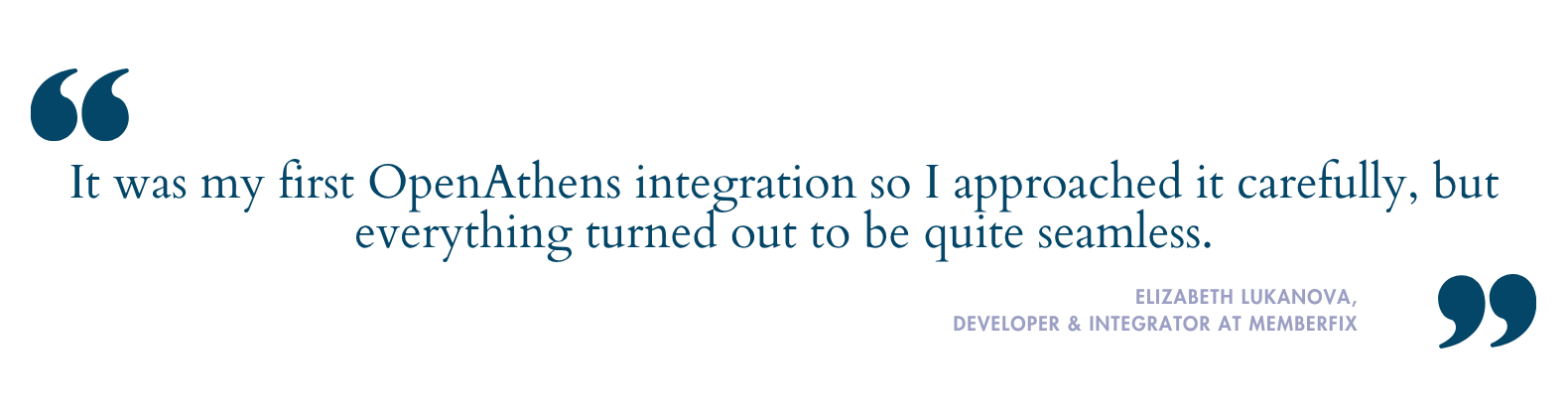
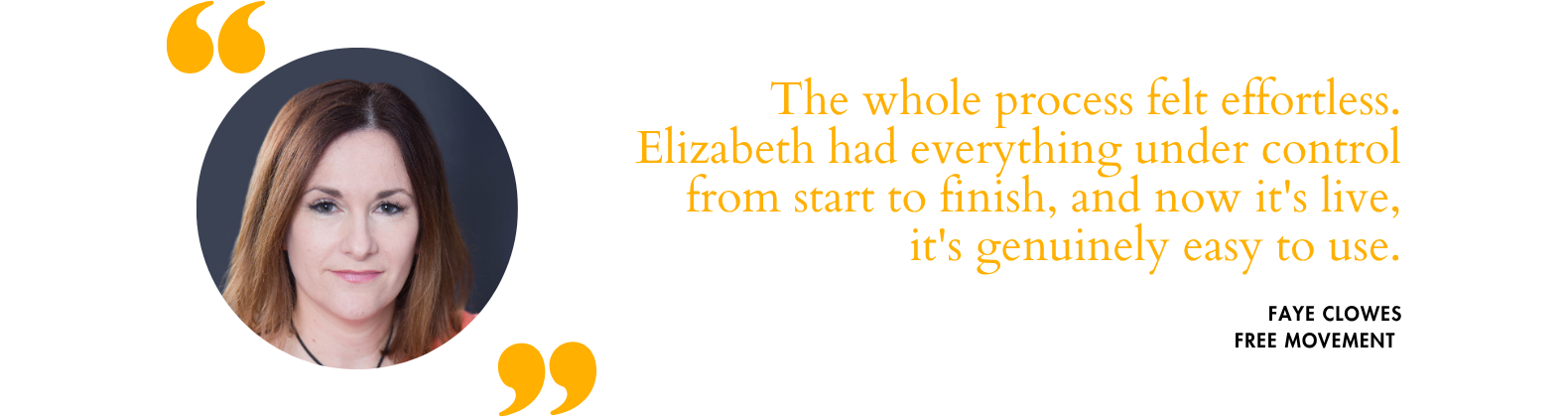
Elizabeth Lukanova, a MemberFix developer and integrator, handled the authentication, single sign-on, and permissions, which meant adjusting WordPress's default configuration to meet OpenAthens' federation requirements and testing each stage with the OpenAthens team before moving to the next. It was her first OpenAthens integration, and she tested each stage on her own ahead of the weekly calls so any snag surfaced early.
Elizabeth Lukanova, Developer and Integrator at MemberFix
Part 2. A self-serve access panel.
OpenAthens did not ask for it. Free Movement did not spec it. Elizabeth built it because the integration alone would have left Free Movement dependent on a developer every time a new university came on.
It is a standalone plugin that lets Free Movement's own staff grant each institution the right level of access in a few clicks, without anyone touching code. Because it is self-contained, it does not hook into anything fragile elsewhere on the site, and it holds no sensitive data of its own. The manual work the operations gap promised never reached Free Movement's desk.
The whole build moved fast. The first component was deployed on 6 Feb 2026, the first successful institutional logins followed on 13 Feb 2026, and the final refinements were complete by 20 Mar 2026: under two months from first deployment to a finished access layer.
OpenAthens had indicated projects of this kind can typically take under a year; this one was ready in under two months. Elizabeth came to development after years working hands-on with code, so the integration was handled by someone with real depth in it.
Such work also drew a response most SSO projects do not: OpenAthens published its own case study about it, featuring the integration as an example of how the process should go.

The Outcome
The access layer that had blocked the university market is now in place.
Free Movement announced its institutional subscription for UK universities, making its archive and courses available through OpenAthens. Students and staff log in with their existing university credentials, with no new accounts to create, and universities can link directly to articles and courses from their virtual learning environment or reading lists.
Before
- Institutional buyers had no clean way in; every university sale risked becoming a custom manual setup.
- One membership model served all users.
- Adding or changing an institution's access meant dev tickets and manual account work.
- The university market was technically unreachable.
After
- University users sign in through OpenAthens, the standard their libraries already use.
- Two distinct institutional tiers: archive access, and archive plus courses with ebook teaching materials.
- Access is granted institution-wide when a user authenticates under an authorized university login.
- Staff grant each institution the right access level in three clicks, no code needed.
- A new institutional subscription is live and available alongside individual and group memberships.
Faye Clowes, Free Movement
The Takeaway
The customers who pay the most rarely buy the way individual customers do. A practicing lawyer signs up with an email and a card. A university covers access for a whole department and expects its people to log in with the credentials they already carry. Different buyer, different way in.
For Free Movement, the block was never the content. Universities already wanted the archive and the courses. The block was the way in. So Free Movement added the two pieces an organizational buyer expects: an access layer its people use with existing credentials, and tiered access plus a way for staff to provision each new institution without a developer. Add that layer, and a segment you could not reach before opens up on the platform you already run.
Thinking about offering institutional or team access on your membership site?
 Reviewed by Vic Dorfman, founder of MemberFix, a WordPress membership expert with 10+ years building, fixing, and scaling membership sites.
Last reviewed September 2026.